What’s the Right Way to Clean a Toilet, Including the Rings and the Parts People Miss?
A toilet looks simple, but it is one of the harder things in the house to clean properly. The bowl gets most of the attention, with a quick swish of the brush and a squirt of cleaner. Meanwhile the hinges, the underside of the rim, the base where it meets the floor, and the flush handle go untouched, and the brown ring just below the waterline comes back a few days after every scrub.
Even a bathroom handed to cleaning services cary for a weekly clean can show a ring in the bowl by the end of the week, because hard water deposits re-form faster than most people expect. The ring is not a sign that anyone cleaned badly. It is a mineral buildup that a quick brush won’t shift, and it needs a different method from ordinary dirt.
Doing the job well comes down to understanding what you are looking at, working in the right order, and keeping a few products apart, whether the toilet is cleaned by the household or by cleaning services.
What Is That Ring, Exactly?
The most common ring is a hard water deposit. Tap water carries dissolved calcium and magnesium, and as the water level in the bowl sits still between flushes, small amounts of mineral build up at the waterline. The deposit is chalky at first and then turns yellow, brown, or grey as dirt and bacteria stick to it. It feels rough rather than slimy.
Rust-coloured streaks usually come from iron in the water or a corroding part in the tank, and dark streaks under the rim and around the drain opening are often mould or a mix of limescale and mould.
The type of mark decides the cleaner. Minerals dissolve in acid, so an acidic bowl cleaner or a long soak in white vinegar works far better than scrubbing with a detergent. Bacterial films respond to ordinary cleaners and a brush.
Cleaning the Bowl Step by Step
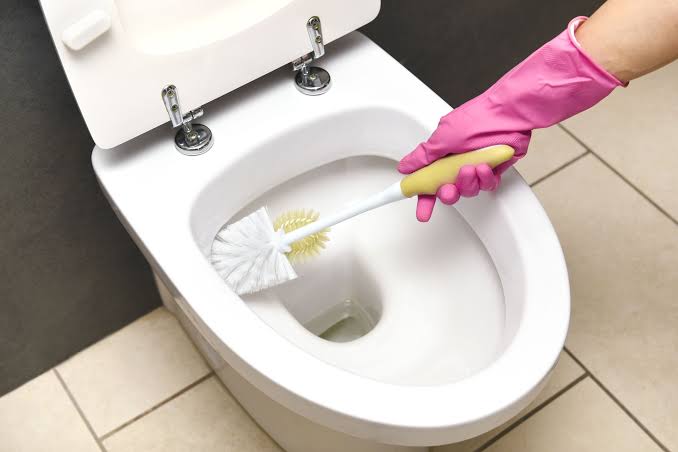
Put on gloves and ventilate the room. Flush, and apply the cleaner under the rim and around the whole bowl, not only in the water. Leave it for the time on the label, which is often ten to thirty minutes, and use that time to clean other parts of the toilet.
For a stubborn mineral ring, lower the water level first by pouring a bucket of water quickly into the bowl, which pushes most of it down the drain, or by using a small cup to bail water out. A cleaner applied directly to the exposed ring works far better than one diluted by a full bowl. For vinegar, soak a few paper towels, press them against the ring, and leave for an hour or overnight.
Scrub with a bowl brush, flush, and rinse the brush in the water as it refills. If a ring remains, a pumice stone designed for toilets can lift it, but only when both the stone and the porcelain are wet throughout. Dry pumice scratches glazed porcelain, and scratches hold dirt and make the ring return faster.
Never mix toilet cleaners with each other. Bleach combined with an acidic cleaner or an ammonia product releases toxic gas. If you use bleach, use it alone and rinse before applying anything else.
The Rim Jets and the Underside
The underside of the rim is the spot people most often skip, and it is where limescale and mould collect out of sight. Many toilets have small jet holes under the rim that deliver water into the bowl, and when they clog with scale, the flush weakens and the bowl cleans less effectively.
Use a bowl brush with an angled head, or an old toothbrush, to scrub the rim line. A small mirror on a handle shows what you are doing. If the jets are blocked with mineral deposits, a straightened paper clip or a small pick, used gently, can clear them. Scrub, then flush to rinse.
The Seat, Hinges, Base, and Floor
Work from the top down so drips and dirt fall onto surfaces you haven’t cleaned yet. Start with the tank lid and the flush handle, which is touched many times a day and collects fingerprints and bacteria. A toilet cleaned on a schedule by CJS Cleaning Solutions still needs a weekly flush-handle wipe from the household, since handles are used far more often than any visit can keep up with.
Lift the seat and wipe the top, underside, and the rim of the bowl with a disinfecting cloth or a cleaner suitable for plastic or wood. Hinge covers lift on most seats, and urine and dust gather beneath them. Clean with a cloth, a cotton swab, or a small brush.
The base matters more than people think. The joint where the toilet meets the floor, the bolt caps, and the floor within a metre of the base catch splashes. Wipe them with a separate cloth. If the caulk line at the base is black, cracked, or soft, it needs attention, and a toilet that rocks, or a damp patch around the base, suggests a failed seal that should be looked at by a plumber.
Cleaning and Caring for the Tank
Most people never open the tank, but it can hold mineral deposits and rust that stain the bowl. If the water in the bowl is discoloured immediately after a flush, lift the lid and look. Pouring a cup or two of vinegar into the tank, leaving it for an hour or so, and flushing can dissolve some deposits.
Drop-in tablets that colour or disinfect the tank are best avoided, because chemicals sitting constantly in the tank can degrade rubber flappers and seals and lead to slow leaks. It is worth saying so to CJS Cleaning Solutions if a regular visit includes the bathroom, since a tablet left in the tank by mistake can shorten the life of the parts inside.
If the toilet runs on after flushing, hisses, or refills at odd times, a worn flapper or fill valve is likely, and that is a repair, not a cleaning problem.
Cloths, Brushes, and Keeping Germs Where They Belong
Toilets are the one part of the bathroom where cross-contamination matters. Use a dedicated set of cloths or disposable wipes for the toilet, and never use the same cloth on the sink, counters, or floor elsewhere in the house.
Clean before you disinfect. A disinfectant works only on a surface that is free of dirt, and it needs to stay wet for the contact time on the label. Wear gloves, wash your hands afterwards, and keep cleaning products out of reach of children and pets.
Toilet brushes need cleaning as well. Rinse the brush under a flush, let it drip-dry over the bowl, and wash the holder regularly, since a wet holder becomes a source of its own.
Homes with a septic system should check that their chosen cleaners are safe for septic use, since heavy use of strong disinfectants may harm the bacteria that break down waste.
Keeping Rings From Returning
Hard water rings come back because the mineral content of the water does not change, so the aim is to slow them down. A quick swish with a brush and a little cleaner every few days prevents deposits from building up. A pumice stone used on a wet bowl once a month keeps a ring from becoming established.
Rings return fastest in a bowl nobody flushes, so a guest bathroom needs a brush and a flush between visits from CJS Cleaning Solutions. A weekly flush of an unused toilet also keeps the trap full and the room free of odours.
Where a household uses cleaning services, a short note about the bowl, such as which products to avoid and where the hinge covers lift, makes sure the parts people miss get attention.
Clean in Order, Keep Products Apart
A clean toilet depends on identifying the mark, using the right product for it, and working from top to bottom, with the bowl last. Give acidic cleaners time to dissolve scale, keep a wet pumice stone on hand for rings, and never combine products. Pay attention to the rim, hinges, base, and handle, because those are the places that get skipped. Whether the toilet is cleaned by you or by cleaning services, the same order and the same careful products give the best result.